Olympia Democrats would love for voters to ignore this year’s Washington State Supreme Court races. That’s because these elections may decide the future of everything from a state income tax to congressional redistricting — and potentially whether Washington remains a one-party progressive experiment for another generation.
Five of the nine seats on the Washington Supreme Court are up this year in what could become the most consequential judicial election cycle in modern state history.
And make no mistake: this is not some sleepy, “nonpartisan” judicial exercise. The ideological stakes are enormous. For years, Washington’s high court has functioned as one of the most progressive supreme courts in the country, routinely siding with the Left on issues involving criminal justice, regulatory power, taxes, and election law.
Now Democrats are terrified that conservatives might finally challenge that dominance.
Why This Matters: The Income Tax Fight
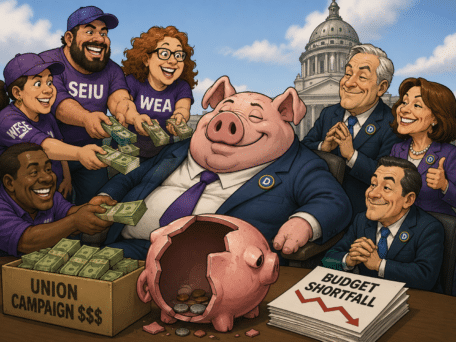
The biggest issue looming over these races is the Democrats’ brand-new 9.9% income tax on earnings above $1 million.
Washington voters have rejected income taxes repeatedly for nearly a century. The Washington Supreme Court has also historically ruled that income is property under the state constitution, meaning graduated income taxes violate constitutional uniformity requirements.
But Olympia Democrats passed the tax anyway.
Why? Because they are openly betting the current court — or a newly reshaped one — will overturn decades of precedent and give them the ruling they want.
That is the entire game.
Even left-wing outlets are admitting the upcoming court could determine whether the state’s long-standing constitutional barriers to an income tax survive.
Conservatives see exactly what is happening here: Democrats couldn’t get voters to support an income tax, so now they are trying to get judges to impose one instead.
And the current court already signaled where its sympathies may lie.
Just last week, the Washington Supreme Court blocked an effort to let voters weigh in directly on repealing the new income tax through a referendum, ruling the law was protected under the constitution’s “support of state government” exception.
Translation: the court helped shield Democrats’ tax hike from voters before the constitutional fight has even begun.
Redistricting Could Be Next
If you think this only affects taxes, think again.
Courts across the country are increasingly deciding who controls congressional maps and legislative districts. Recent rulings in states like Wisconsin and Virginia have shown how state supreme courts can completely reshape political power for years.
Washington is no exception.
Future legal fights over congressional districts, legislative maps, voting rules, and ballot access could all land before the Washington Supreme Court. And with Washington Democrats already accused of drawing politically favorable maps in the past, conservatives have every reason to believe the judiciary will become the next battleground.
The Left understands this perfectly. Progressive activists are openly framing these races as critical to protecting their political agenda on taxes, elections, climate policy, and social issues.
That should tell voters everything they need to know about how “nonpolitical” these races really are.
The Candidates Reflect the Divide
Several races already feature clear ideological contrasts.
Conservative candidates such as Judge David Stevens and attorney Scott Edwards are running against candidates closely tied to progressive legal activism and the Ferguson political machine.
Meanwhile, newly appointed justices connected to Governor Bob Ferguson are defending seats after being elevated to the court this year.
Progressives are panicking about conservative legal groups becoming involved in the races. Conservatives, meanwhile, are simply wondering why the Left suddenly hates judicial activism now that someone else might engage in it.
Funny how that works.
This Election Will Shape Washington for Decades
Most voters pay little attention to judicial races. That is exactly how the political establishment likes it.
But these elections could ultimately determine:
- Whether Washington gets a permanent state income tax
- Whether future tax increases survive constitutional scrutiny
- How congressional and legislative maps are drawn
- How aggressively courts intervene in election law
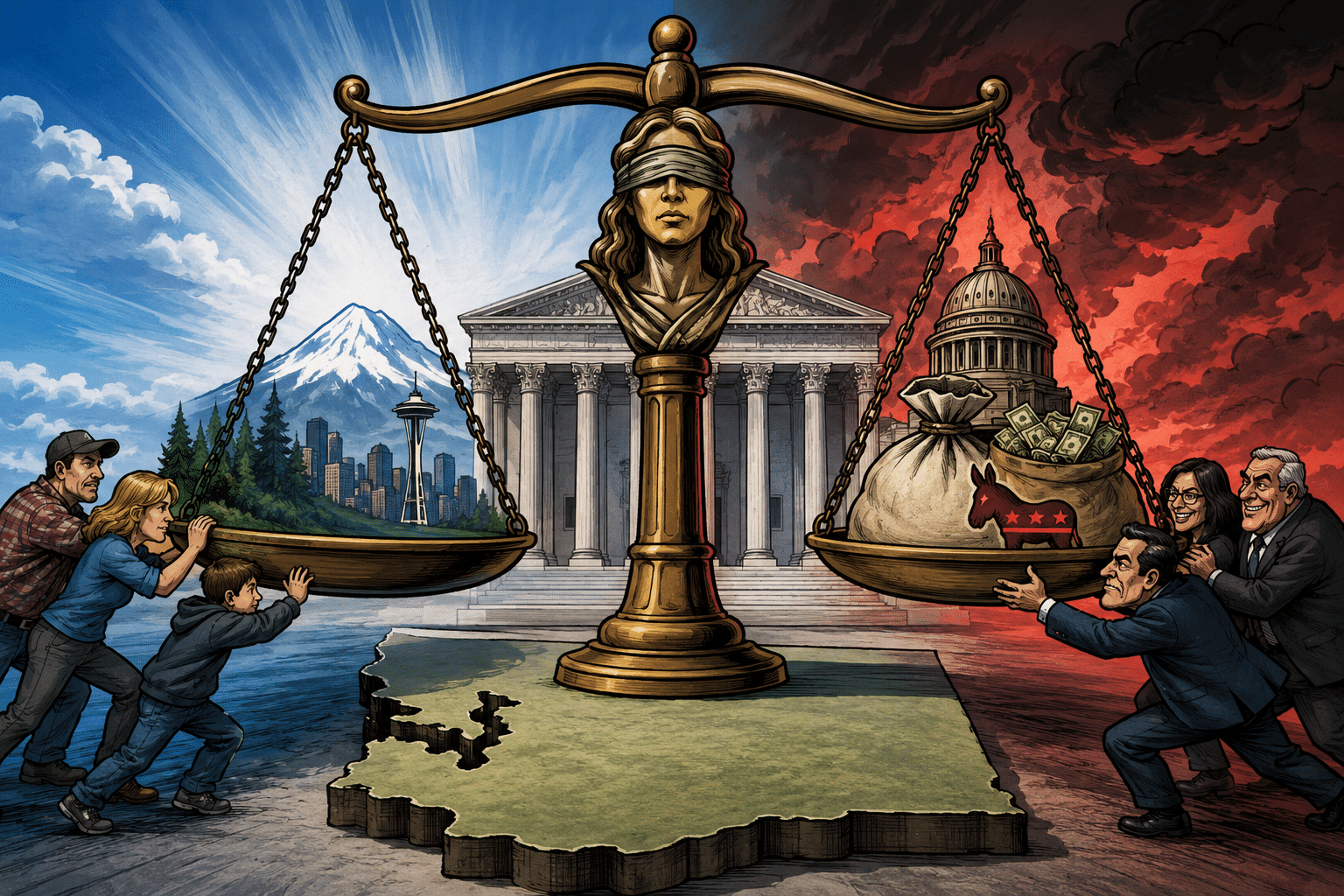
- Whether the judiciary acts as a constitutional check — or merely an extension of Olympia Democrats
The Washington Supreme Court was never supposed to function as a backup legislature for one political party. But increasingly, that is exactly what many voters believe it has become.
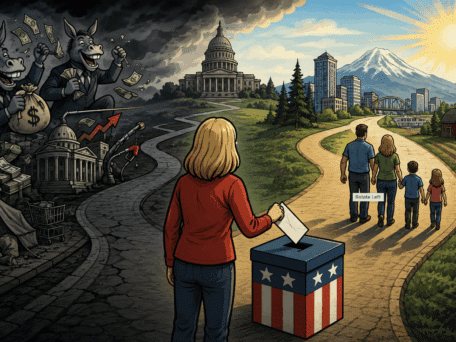
This November, Washington voters may finally get the chance to decide whether that continues.