
If you wanted a case study in how to grow government while calling it “affordability,” Olympia just delivered.
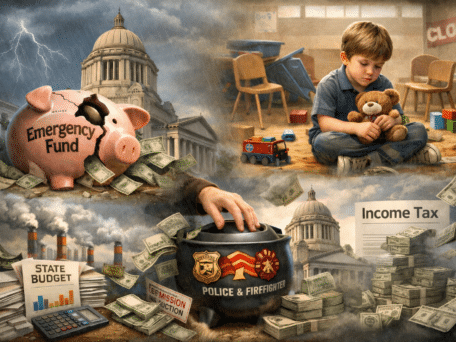
The 2026 Washington legislative session wrapped up exactly how it started: with Democrats insisting the state is both flush with cash and somehow desperately in need of billions more from taxpayers.
The $80 Billion “Shortfall”
Let’s start with the centerpiece excuse for everything that followed: the so-called budget “crisis.”
This is a state that just passed an operating budget north of $80 billion—up dramatically from just a few years ago. Yet somehow, Democrats claimed they were staring down a multi-billion-dollar deficit.
How does that happen?
Easy. Spend first. Then act surprised later.
Instead of serious conversations about prioritizing existing spending, Democrats leaned into a familiar playbook: assume every program must grow, then declare a “shortfall” when revenues don’t keep up with the wish list.
Income Tax—Just Don’t Call It That
The headline move this session was the passage of a 9.9% tax on high earners under SB 6346—marketed, of course, as a “millionaires’ tax.”
But let’s be honest about what this represents: the closest thing Washington has come to a full-blown income tax in modern history.
Democrats tried to soften the blow by bundling in tax credits, exemptions, and spending programs. But those add-ons don’t change the core reality—this is a brand-new revenue stream layered on top of an already massive budget.
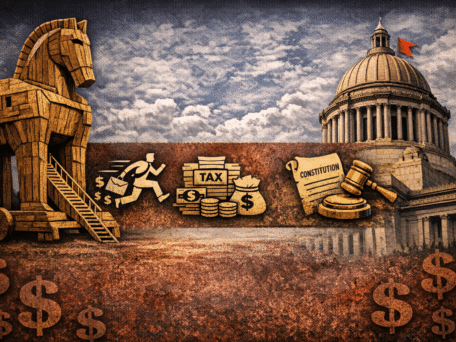
Even more telling? The inclusion of an emergency clause, effectively blocking voters from having a direct say.
Nothing says “this is popular” quite like making sure it can’t go to a referendum.
Affordability—The Talking Point That Doesn’t Add Up
Throughout the session, lawmakers repeatedly framed their agenda as a response to affordability concerns.
At the same time, they:
- Advanced new taxes
- Expanded long-term spending commitments
- Relied on one-time fixes and reserve transfers to balance the books
That’s not a strategy for affordability—it’s a strategy for kicking the problem down the road.
Washington families don’t experience affordability through press releases. They experience it through higher costs, fewer options, and a growing gap between government promises and economic reality.
Quietly Reshaping Local Communities
While the income tax grabbed headlines, dozens of other bills moved with far less attention—and potentially longer-lasting impacts.
Measures like HB 2266 require cities to allow certain housing types in areas previously reserved for traditional neighborhoods, limiting local control and standard zoning flexibility.
Democrats call it necessary reform. In reality, it’s a top-down mandate that overrides community input.
Either way, it’s another example of Olympia making sweeping decisions with limited transparency and even less local say.
Power, Process, and Less Public Input
If there was a defining theme beyond taxes and spending, it was process.
This session saw:
- Major policy changes pushed through late at night
- Lengthy floor debates followed by rapid votes
- Increasing reliance on procedural tools to limit public recourse
From restricting referendum options to controlling access and participation, the direction is clear: decisions are being made faster—and with fewer opportunities for public pushback.
The Bottom Line
By the end of the session, Washington taxpayers were left with:
- A larger budget
- New taxes
- Expanded long-term obligations
- And fewer avenues to challenge it all
Lawmakers will argue they delivered “progress.” Maybe.
But if progress means higher costs, less transparency, and more centralized control, it’s fair to ask: progress for who?