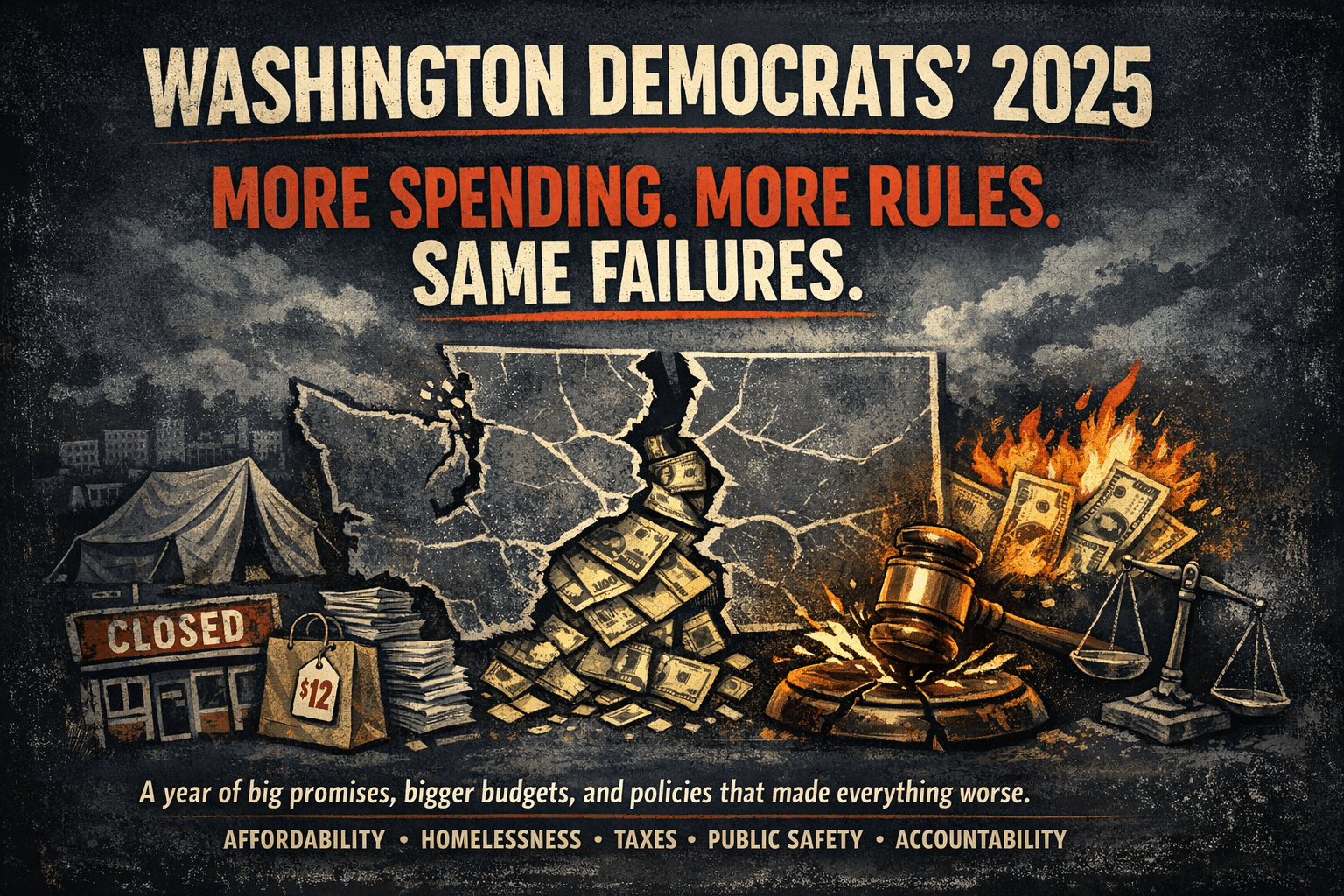
As 2025 crawls to a close, Washington Democrats want voters to pause, reflect, and admire their “progress.” And to be fair, it was a busy year—if your metric for success is higher costs, thicker rulebooks, and problems that somehow got worse despite record spending.
Let’s start with affordability, because that one hit everyone. Democrats spent the year insisting Washington’s soaring cost of living was unavoidable—while expanding sales taxes, hiking bag fees, layering on new labor mandates, and quietly taxing more everyday services. Dining out costs more. Small businesses are squeezed harder. Consumers pay the difference. Olympia’s response? Another lecture about “equity” and a promise that the next policy will fix the damage caused by the last one.
The environmental agenda delivered one of the year’s most perfectly on-brand outcomes. Democrats raised the plastic bag fee again, congratulated themselves for being green, and then ignored the inconvenient data showing total plastic waste increased. Fewer bags left stores, but they were thicker, heavier, and tossed just as quickly—meaning more plastic in landfills and higher costs at checkout. It’s the 2025 governing formula in miniature: symbolic action, worse results, zero accountability.
On housing, Democrats finally admitted—quietly—that government is the problem. After years of hostile business taxes, labor mandates, regulatory gridlock, permissive crime policies, and endless permitting delays, they acknowledged that these very policies are why housing doesn’t get built. Their solution? Convert the empty commercial spaces their policies helped create into apartments. Bulldoze the evidence of failure, rezone it, and call it innovation—without ever addressing why the jobs left or where new ones are supposed to go.
Homelessness remained the most expensive failure of all. Billions more were poured into programs, consultants, and nonprofit contracts in 2025, with little to show beyond more tents, more open-air drug use, and more people suffering on sidewalks. Accountability remains radioactive. Outcomes are optional. If a program fails, it isn’t reformed—it’s refunded, expanded, and wrapped in a new press release blaming “systemic issues.”
Public safety followed the same script. Ideological experiments lingered, repeat offenders cycled through the system, and only after years of public outrage did Democrats grudgingly tighten DUI laws they once softened. Communities paid the price while Olympia debated intentions instead of consequences.
Hovering over everything was spending. Democrats burned through surplus revenue like it would last forever, locked in new ongoing programs, and now face looming budget gaps they’ll pretend came out of nowhere. Waste isn’t a side effect of this system—it’s a feature.
Which brings us to the year’s grand finale: Bob Ferguson’s so-called “millionaire tax.” Pitched as an easy fix for the budget mess Democrats created, it’s really just an income tax despite our state constitution clearly forbidding one. Rather than cut spending or admit failure, Democrats are daring the courts to intervene—hoping that “tax the rich” rhetoric will distract from the fact that this proposal is legally shaky and fiscally desperate.
All of this happened under one-party rule. Republicans were sidelined, warnings were dismissed, and dissent was treated as an inconvenience rather than a signal.
So as the clock strikes midnight, Democrats will toast to another year of “bold leadership.” The rest of Washington gets the bill, the bureaucracy, the tents, the higher prices—and now an unconstitutional tax proposal waiting for its day in court.
Here’s to 2026. May it bring fewer slogans, fewer mandates, and at least a passing interest in results.